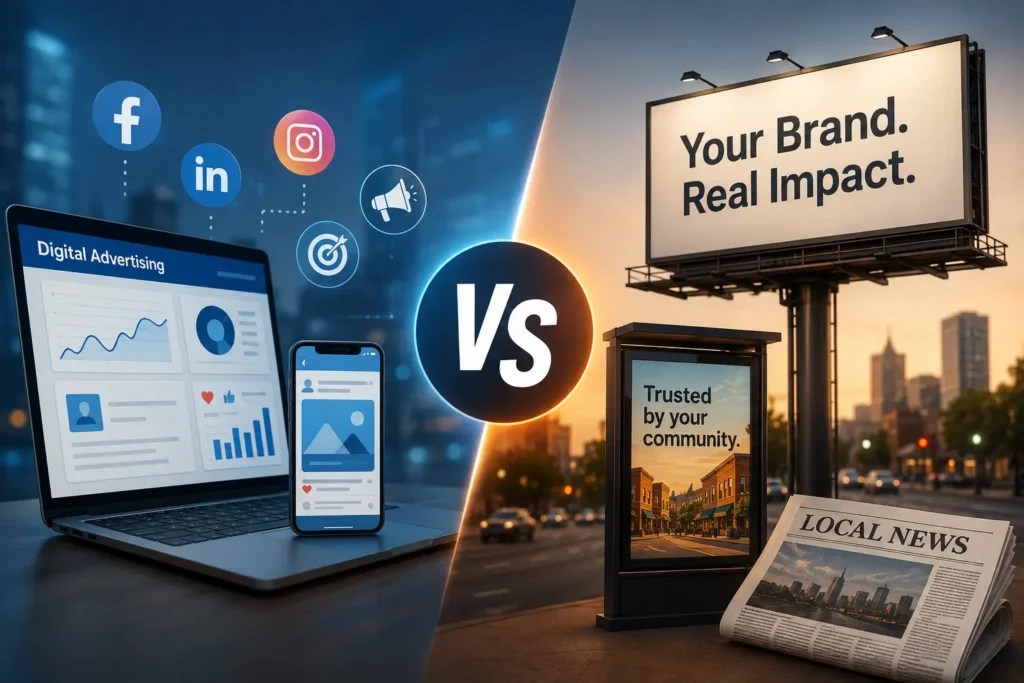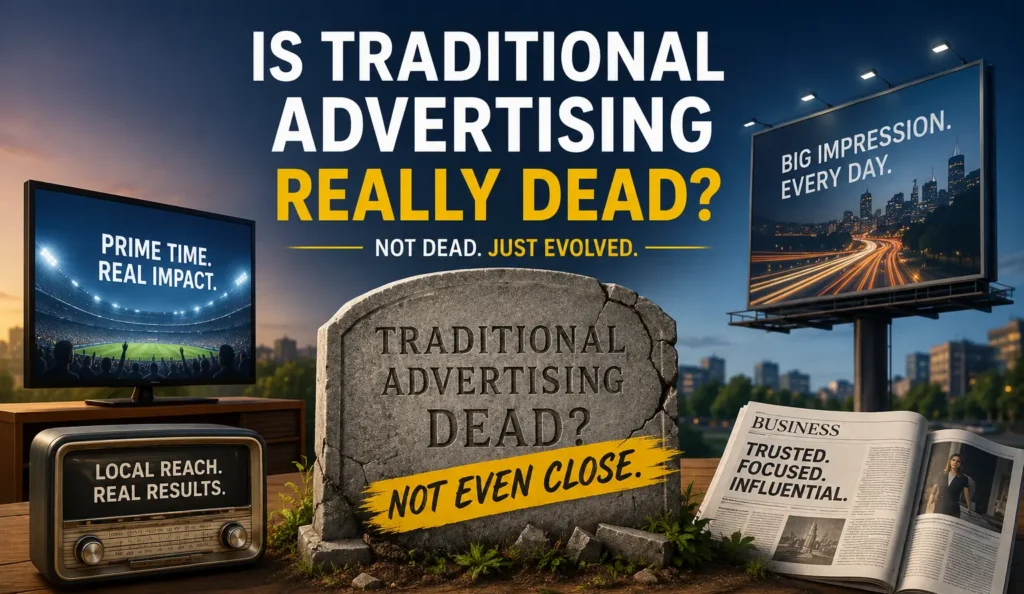
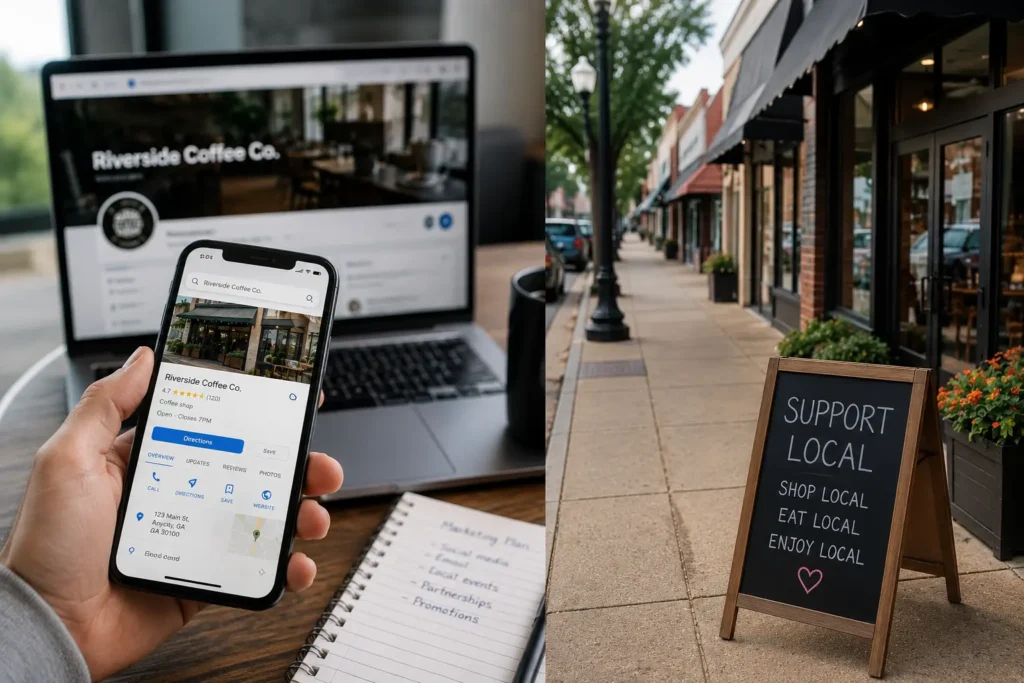
Local Business Marketing Has Changed in 2025
Local businesses can no longer rely on a single marketing channel.
A Facebook page alone is not enough.
Neither is a billboard sitting quietly beside the highway hoping for divine intervention.
In 2025, successful local business marketing combines:
- Online visibility
- Offline community presence
- Consistent branding
- Cross-channel customer engagement
Consumers now move constantly between digital and physical environments before making purchasing decisions.
They may:
- Discover a business on social media
- Hear about it on local radio
- Search Google reviews later
- Visit the store weeks afterward
Businesses that dominate local markets understand this entire journey — not just isolated clicks.
What Is Local Business Marketing?
Local business marketing is the process of promoting products or services to customers within a specific geographic area using both digital and traditional marketing channels.
The goal is simple:
Become the business people recognize, trust, and remember in your local community.
Common Local Marketing Channels Include:
Online Marketing Channels
- Google Business Profile optimization
- Local SEO
- Social media marketing
- Google Ads
- Email marketing
- Online reviews and reputation management
Offline Marketing Channels
- Local radio advertising
- Community newspapers
- Outdoor advertising
- Sponsorships and local events
- Direct mail campaigns
- In-store promotions
The strongest local brands combine both.
Why Online-Only Marketing Fails Many Local Businesses
Digital marketing offers speed and targeting, but relying exclusively on online channels creates serious weaknesses.
Many local businesses struggle with:
- Rising ad costs
- Short attention spans
- Limited brand loyalty
- Declining organic reach
- Weak community recognition
A customer might click an ad once and never think about your business again.
Offline visibility changes that.
When customers repeatedly encounter your business:
- On local radio
- At community events
- On outdoor signage
- In local publications
Your brand becomes familiar.
And familiarity creates trust.
Trust, inconveniently enough, still influences purchasing decisions more than algorithms do.
Why Offline Presence Still Matters for Local Brands
Offline marketing creates something digital advertising often struggles to replicate:
real-world legitimacy.
Consumers tend to trust businesses they physically encounter within their community.
Traditional local advertising strengthens:
- Brand recognition
- Community familiarity
- Geographic visibility
- Long-term customer loyalty
- Word-of-mouth referrals
For local retailers especially, offline visibility amplifies digital marketing effectiveness rather than competing with it.
Local Marketing Channels That Work Best Together
The most effective local marketing strategies integrate online and offline channels into one coordinated experience.
Google Business Profile + Local Radio Advertising
Google Business Profile helps customers find your business online.
Local radio advertising helps them remember your name before they search.
Together, they increase:
- Branded searches
- Local awareness
- Website traffic
- Store visits
Local SEO + Community Print Advertising
Local SEO ensures your business appears in regional search results.
Community newspapers and print advertising reinforce authority and trust among local audiences.
This combination works particularly well for:
- Retailers
- Healthcare organizations
- Home service businesses
- Community-focused brands
Social Media + Outdoor Advertising
Social media drives engagement.
Outdoor advertising increases recognition.
Consumers exposed to both are more likely to:
- Remember your business
- Follow your brand online
- Engage with promotions
- Visit physical locations
Integrated visibility creates stronger local market penetration.
Local Marketing Strategies for Mid-Sized Retailers
Mid-sized retailers face a difficult challenge.
They compete against:
- National chains with massive budgets
- Online-only competitors
- Smaller local businesses with loyal communities
Integrated local marketing helps retailers:
- Increase store traffic
- Build community trust
- Improve local awareness
- Support digital campaigns
- Create repeat customers
Retail success often depends on becoming visible both online and within the local community itself.
Government Agency Local Outreach Best Practices
Government agencies require broader communication strategies than most private businesses.
Not every audience:
- Uses digital platforms consistently
- Trusts online messaging
- Accesses information through social media
Traditional local media remains essential for:
- Public outreach
- Educational campaigns
- Emergency communication
- Community engagement
- Accessibility initiatives
Digital marketing supports these efforts, but local offline visibility remains critical for credibility and reach.
How to Build an Integrated Local Marketing Plan
Step 1: Strengthen Your Local Digital Presence
Focus on:
- Google Business Profile optimization
- Local SEO
- Online reviews
- Mobile-friendly website performance
Step 2: Build Community Visibility Offline
Invest in:
- Local sponsorships
- Radio advertising
- Outdoor signage
- Community partnerships
- Regional publications
Step 3: Keep Messaging Consistent Everywhere
Customers should recognize the same:
- Brand identity
- Voice
- Offerings
- Visual style
- Value proposition
Across every channel.
Step 4: Measure Long-Term Brand Growth
Not every successful marketing result appears instantly in analytics dashboards.
Track:
- Brand recognition
- Store visits
- Repeat customers
- Community engagement
- Referral growth
The strongest local brands are built over time.